
Quality Standards · Care & Usage Guide
Method Quality Standards & Care Guide
Every life hack in this directory earns its specification code the long way—through in-home trials, tool audits, and plain-language usage notes written for American households that keep things well.
How a Method Earns the Standard
We treat household shortcuts the way good workshops treat tools: nothing enters the collection until it has proven itself. Each candidate method passes through four verification gates before its specification code is stamped.
- Thirty-day in-home trial. The method runs daily or weekly in real American kitchens, baths, entries, and workspaces—never in a studio alone.
- Repeatability notes. Trial households record how the method behaves on the fifth day and the twenty-fifth, not just the first.
- Tool and material audit. Every brush, cloth, jar, and divider is checked for durability, honest materials, and straightforward care.
- Fit check. Editors write the final specification card in plain language so any household can judge the method before adopting it.
Care & Usage Guidance
The collection leans on ordinary household staples—cool water, white vinegar, baking soda, castile soap, and simple mechanical action. Used thoughtfully, they carry most everyday cleaning and organization work. A few care habits keep both tools and surfaces in long service:
- Spot-test any cleaning solution on an inconspicuous area of stone, wood, or finished metal before broad use.
- Work with good ventilation when using vinegar or castile soap solutions, and mix them in clearly marked glass vessels.
- Keep concentrated household solutions out of reach of children and pets, and store them away from pantry goods.
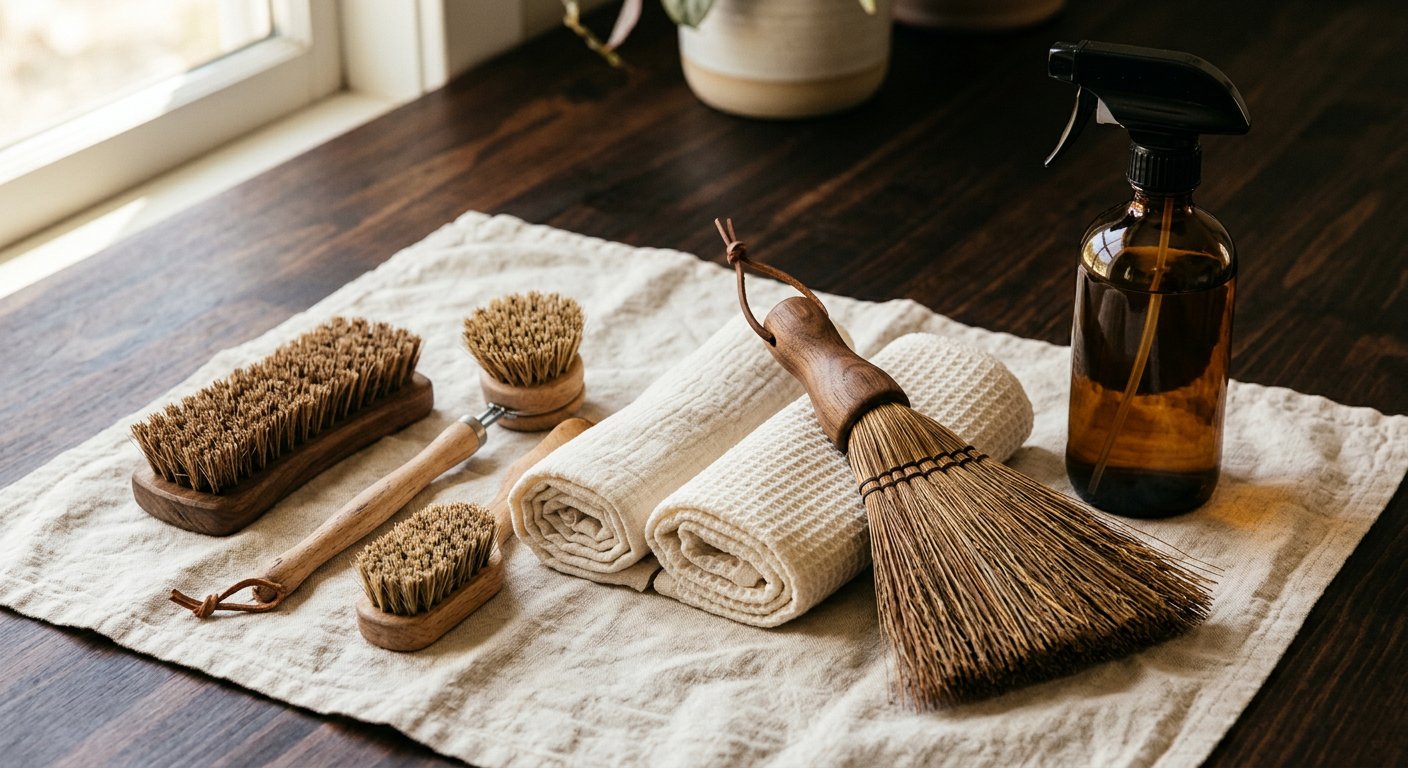
- Rinse natural-bristle brushes in cool water after each session and air-dry them bristle-down so the wooden handles stay sound.
- Launder undyed cotton cloths in cool water without softener, which keeps their absorbency honest for years.
Tool & Material Standards
The specification ledger names exact material standards, summarized here:
- Brush Standard
- Natural bristle set into full-tang wooden handles; no hollow plastic ferrules, no synthetic fills in the flagship kits.
- Cloth Standard
- Undyed cotton or linen weaves, hemmed with turned edges, sized to fold into thirds for the reset caddy.
- Vessel Standard
- Borosilicate glass jars and bottles with plain wooden or cork lids, chosen for pantry rotation and solution mixing alike.
- Divider Standard
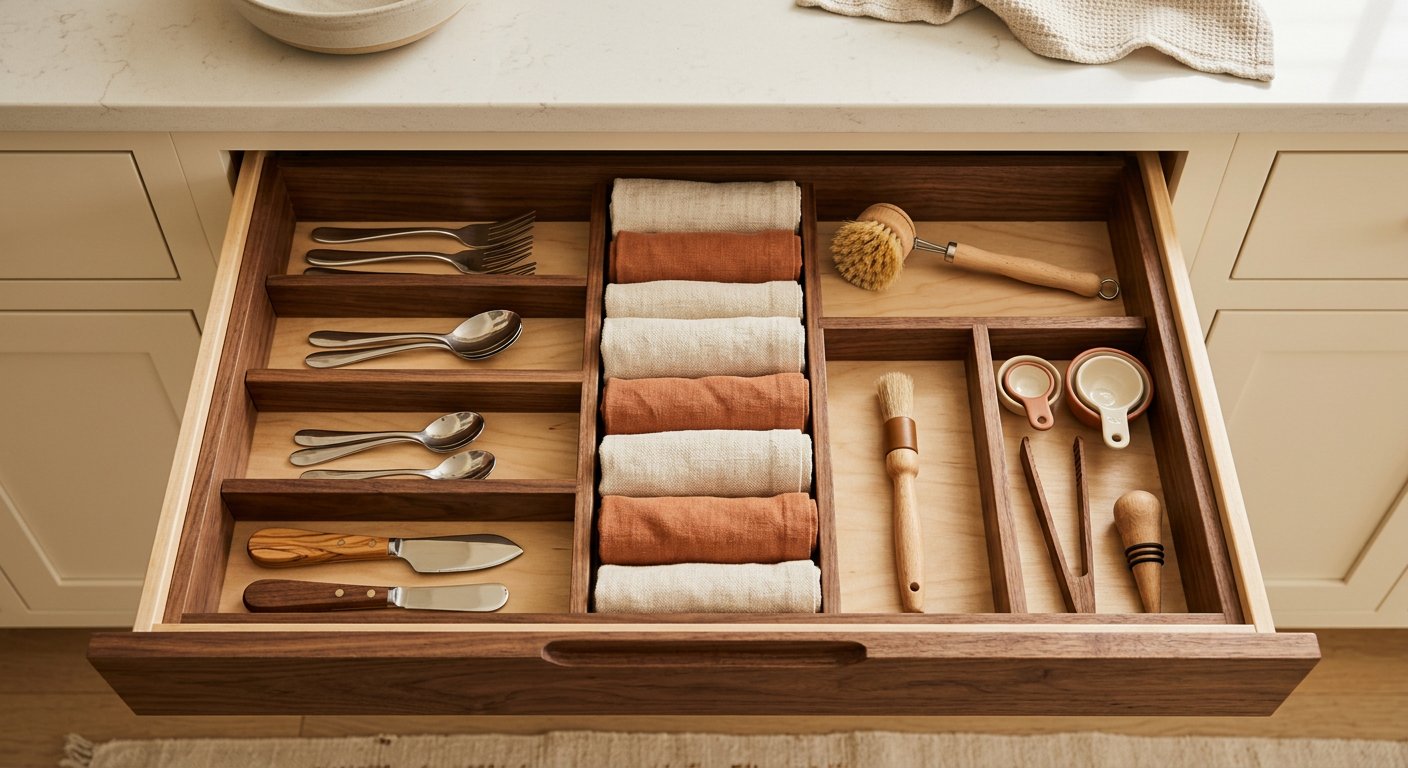
- Solid-wood drawer dividers, adjustable and unlacquered, so drawer zone mapping stays adaptable as tools change.
Refresh & Review Cadence
Long-term reliability is a practice, not a promise. Revisit your adopted methods each season: replace cloths that have thinned, re-oil wooden tools, and retire any routine that no longer fits your household. Our editors re-verify the full directory on the same quarterly rhythm.
Last updated: June 12, 2026